

Welcome to your training provider
Train Assured provides quality training in First Aid, Health & Safety and Manual Handling.
Flexible and mobile training options offered in your workplace or classroom to suit your needs
Courses
First Aid Training
Approved and regulated First Aid training courses available in your workplace setting or in the classroom.
Emergency First Aid at Work Level 2 (VTQ)
Paediatric First Aid at Work Level 3 (RQF or VTQ)
First Aid at Work Level 3 (RQF or VTQ)
Manual Handling Training
Safe moving & handling of objects Level 2 (VTQ)
Approved and regulated courses in person at your work place.
Manual Handling Training
Moving & Positioning of people Level 2 (VTQ)
Approved and regulated courses to be undertaken in an environment where the following equipment is provided.
Hoist
Slide sheets
Transfer board
Turntable
Walking frame
Walking stick
Wheel chair
Profiling bed

Under UK HSE regulations, employers must ensure adequate first-aid provision, which is determined by a risk assessment. Generally, low-risk workplaces with over 50 employees need trained First Aiders (FAW), while smaller or high-risk sites require Emergency First Aid (EFAW) trained staff.
Key Requirements for First Aid Training
Risk Assessment Focus: The number of trained staff depends on the workplace's specific risks (e.g. machinery vs office work).
Small, Low-Risk Sites (<50 staff): At least one person trained in Emergency First Aid at Work Level 2 EFAW is recommended.
Large, Low-Risk Sites (>50 staff): At least one First Aid at Work level 3 (FAW3) trained person for every 50 employees.
High-Risk Sites (e.g., construction, factories): Higher ratios are needed; typically, 1 EFAW trained for every 25 staff might be required.
Training and Certification
FAW (First Aid at Work): Valid for 3 years, requires a 2-day requalification course before expiry.
EFAW (Emergency First Aid at Work): Valid for 3 years, focuses on immediate, life-saving interventions.
Paediatric First Aid at Work: Valid for 3 years.
Paediatric first aid training is required in the UK for anyone working with children, especially early years staff (nurseries, pre-schools), childminders, and nannies, to meet OFSTED and EYFS legal requirements. It is also recommended for teachers, school staff, sports coaches, parents, and caregivers to ensure safety in emergencies.
Key Individuals and Sectors Requiring Training:
Early Years Practitioners: Staff in nurseries, pre-schools, and childminders, especially those needed to meet staff-to-child ratios.
Childcare Professionals: Nannies, au pairs, and babysitters.
Schools & Education: Staff within school settings, particularly those working with young children.
Activity Providers: Sports coaches, youth group leaders, and children's entertainers.
Parents & Caregivers: Parents, grandparents, and guardians seeking to learn life-saving skills.
Legal and Professional Requirements:
EYFS/Ofsted: Early years practitioners in England often need a full 2-day Paediatric First Aid certificate (level 3) to be included in legal ratios.
Training Validity: Certificates are typically valid for 3 years, after which retraining is required.
Emergency Roles: Anyone in a role involving responsibility for young children should receive this training to handle scenarios like choking, CPR, and severe allergies.
First Aid Courses
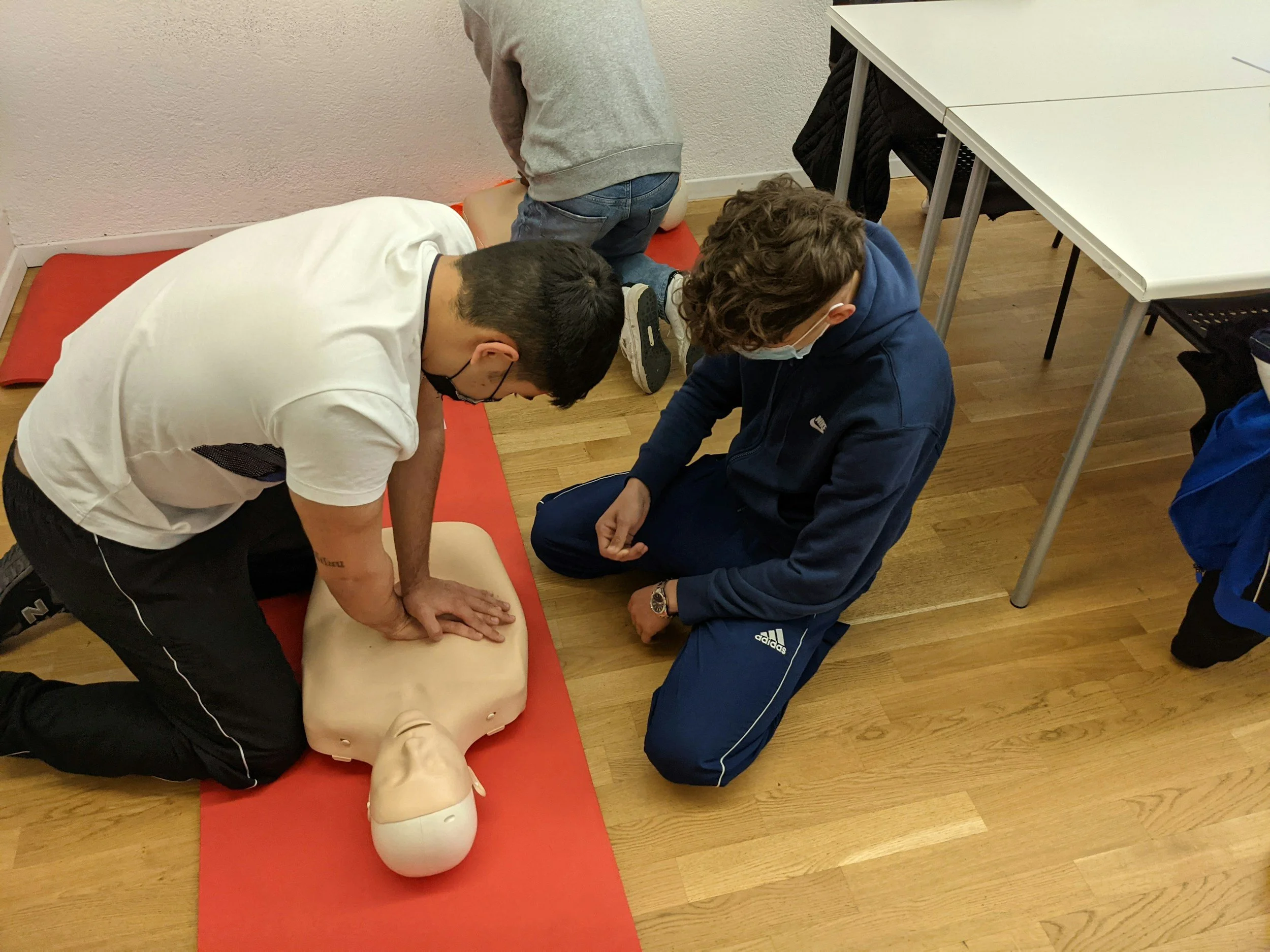
EFAW Emergency First Aid at Work
1 Day course - 6 hours
Ideal for personnel in low risk environments.
Covering the following subjects…
Roles and responsibilities of a first aider
Initial Assessment
Cario Pulmonary Resuscitation (CPR)
Automated External Defibrillator (AED)
Unresponsive Casualty
Choking
Bleeding Control
Shock Management
Minor Injuries

PFAW Paediatric First Aid Level 3
2 Day course - 12 hours
Ideal for childminders, teachers or those working with children.
Covering the following subjects in adults, children and infants…
Roles and responsibilities of a first aider
Initial Assessment
Cario Pulmonary Resuscitation (CPR)
Automated External Defibrillator (AED)
Unresponsive Casualty
Choking
Bleeding Control
Shock Management
Minor Injuries
Medical conditions in children such as: Meningitis, Febrile Convulsions, Sickle Cell, Croup and bronchiolitis.
Managing foreign bodies
Extreme temperatures
Communication
Accident reporting
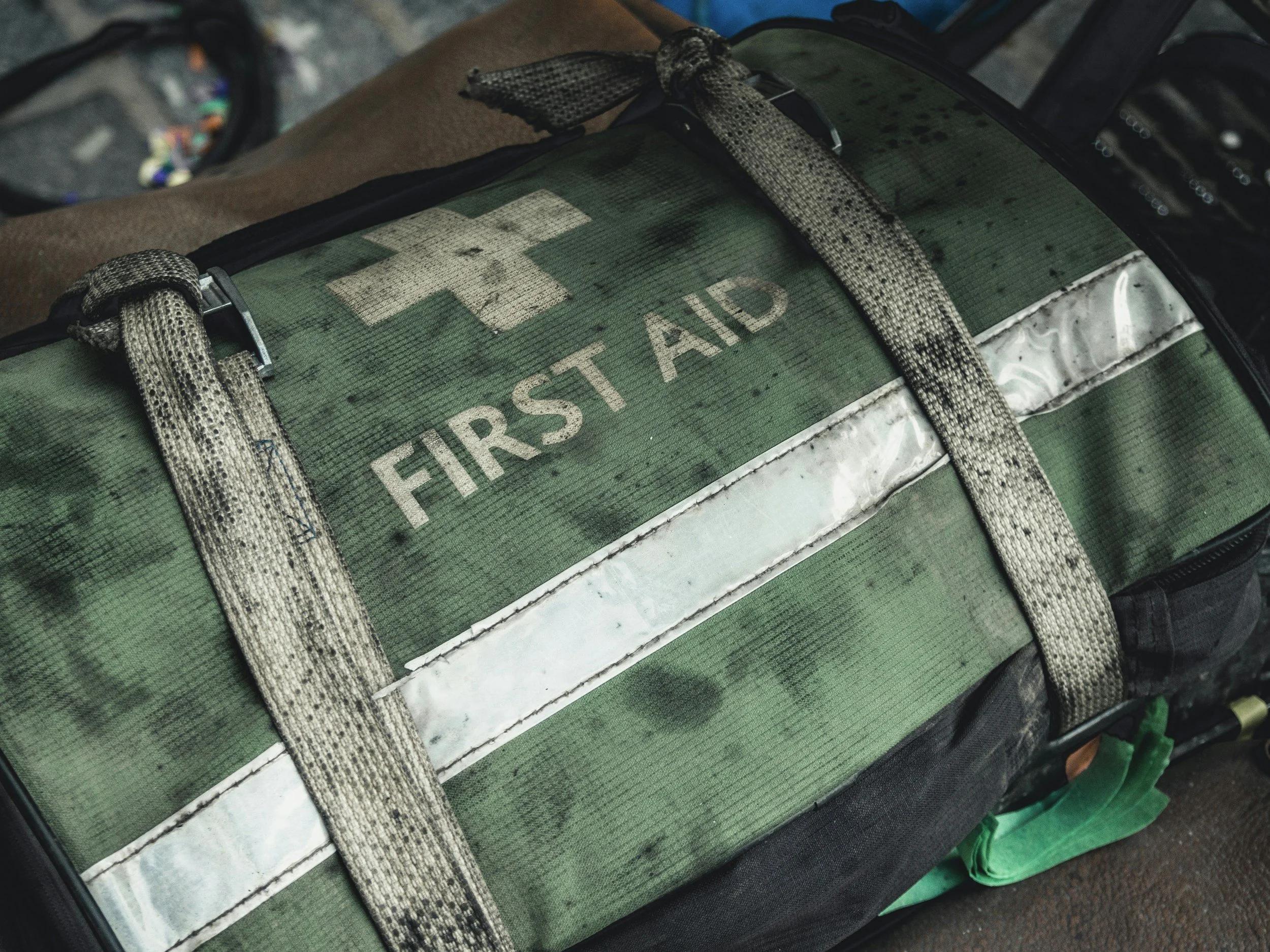
First Aid at Work Level 3
3 Day course - 18 hours
Ideal for those working in higher risk environments.
Covering….
Roles and responsibilities of a first aider
Initial Assessment
Cario Pulmonary Resuscitation (CPR)
Automated External Defibrillator (AED)
Unresponsive Casualty
Choking and seizures
Bleeding Control
Shock Management
Minor Injuries
Bone fractures, dislocations, sprains and strains
Head and spinal injuries
Chest injuries
Burns
Extreme temperatures
Eye injuries
Respiratory issues
Anaphylaxis
Diabetes
Poisoning
and more…
Safe moving & handling of objects Level 2 (VTQ)
According to HSE guidance, manual handling training is required for all employees whose work involves lifting, carrying, pushing, pulling, or supporting loads by hand or bodily force. Training is essential for staff frequently handling items, working in confined spaces, or adopting poor posture to manage risks.
Who Needs Training
High-Risk Personnel: Employees in warehouses, factories, construction sites, and logistics (delivery drivers).
Healthcare Staff: Workers involved in moving or handling patients.
Office Staff: Those handling office equipment or lifting items.
New/Reassigned Workers: Staff, including young employees, who are new to a role, changing tasks, or taking on new responsibilities.
Managers & Safety Reps: Anyone responsible for supervising or assessing manual handling risks.
Training should not be a sole solution but part of a wider risk reduction plan, focusing on:
Safe manual handling techniques.
How to use mechanical aids and equipment.
Recognising potential risks in their working environment.
Refreshers should be provided regularly (often recommended yearly).
It is recommended to first avoid manual handling, then use mechanical aids, and finally train staff if tasks cannot be avoided.

Contact Us
General Enquiries
Course Bookings
Suitability and Availability
Further Information
Prices